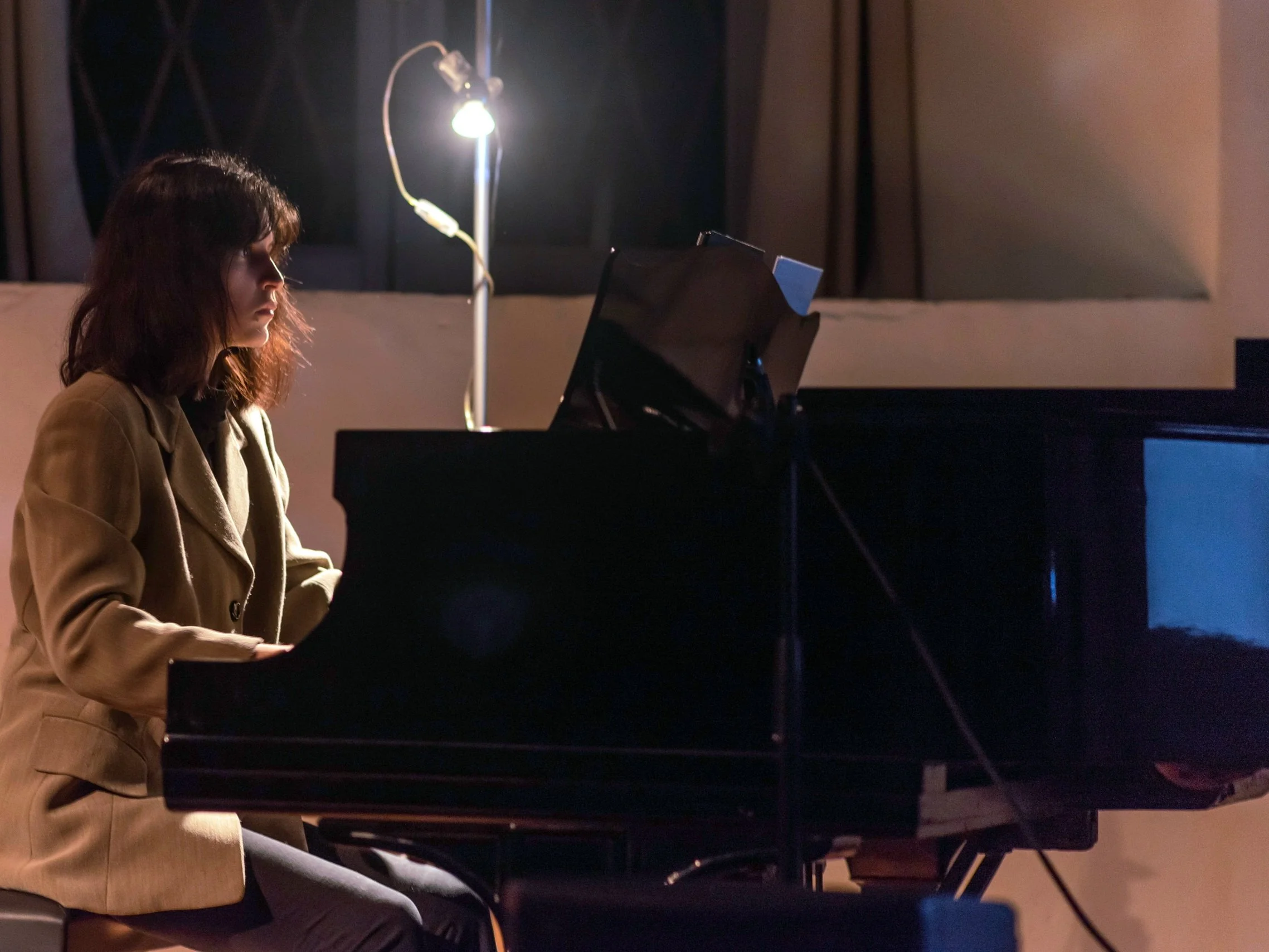
Play: Audio_Image.exe
Multimedia performance with painting installation
Is it possible to visualize a musical piece? What does it mean to “see” a musical piece?
The artist is a pianist and painter. Around 2017, she began an artistic research project to represent the musical pieces she performed through paintings. This research became the subject of her bachelor’s thesis, “Resonant Paintings – Report on the Possibilities of Pictorial Representation of a Musical Piece”[1]. The problem concerned the representation of pre-existing musical works. The research was not intended to be a simple visual representation of acoustic parameters such as frequencies, nor a visualization of sound waves, nor an alternative form of musical notation. Instead, it aimed to represent the interpretation of the musical piece, in a way closer to the work of the musical painter Charles Blanc-Gatti[2] than to Luigi Veronesi[3]. The artist observed that many attempts to visualize music, whether through video or static images, are often made by people who are not musicians. In some cases, they lack basic knowledge of music theory; in most cases, they lack the awareness that comes from performing a piece, understanding its structure, and reflecting on its interpretation. It is like speaking about a book having read only its summary. Blanc-Gatti’s works are successful because, in addition to being synesthetic, he was also a musician.
The artist selected a program of six musical pieces. For each piece, she carried out an artistic research process that included musical analysis, study of the composer, and—when possible—direct dialogue with living composers such as Stolzel and Sam Wu. This process helped define her interpretation of each work. In collaboration with the composer Francesco Rota, the original piano pieces were also reworked, and an electronic part was added to each piece.
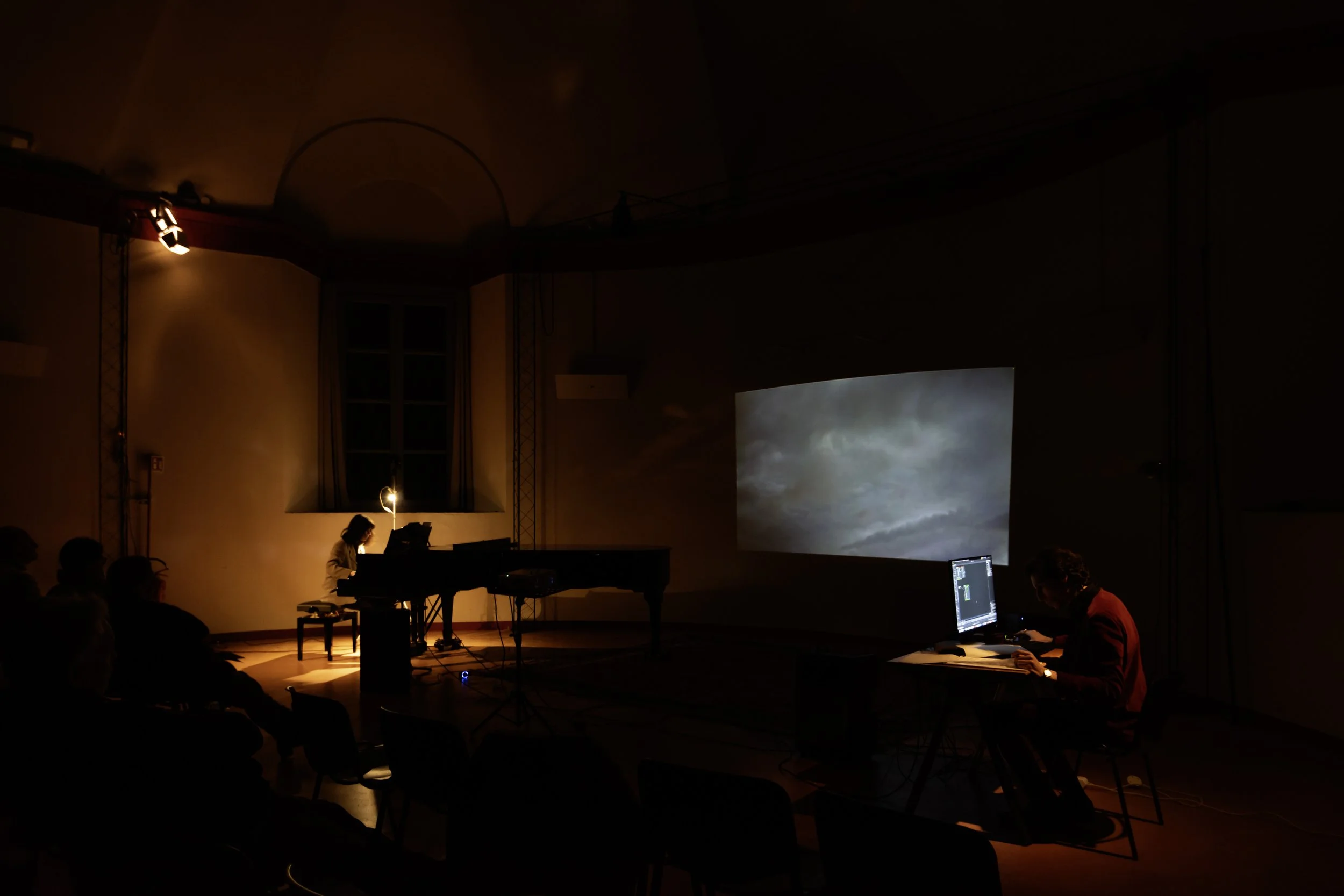
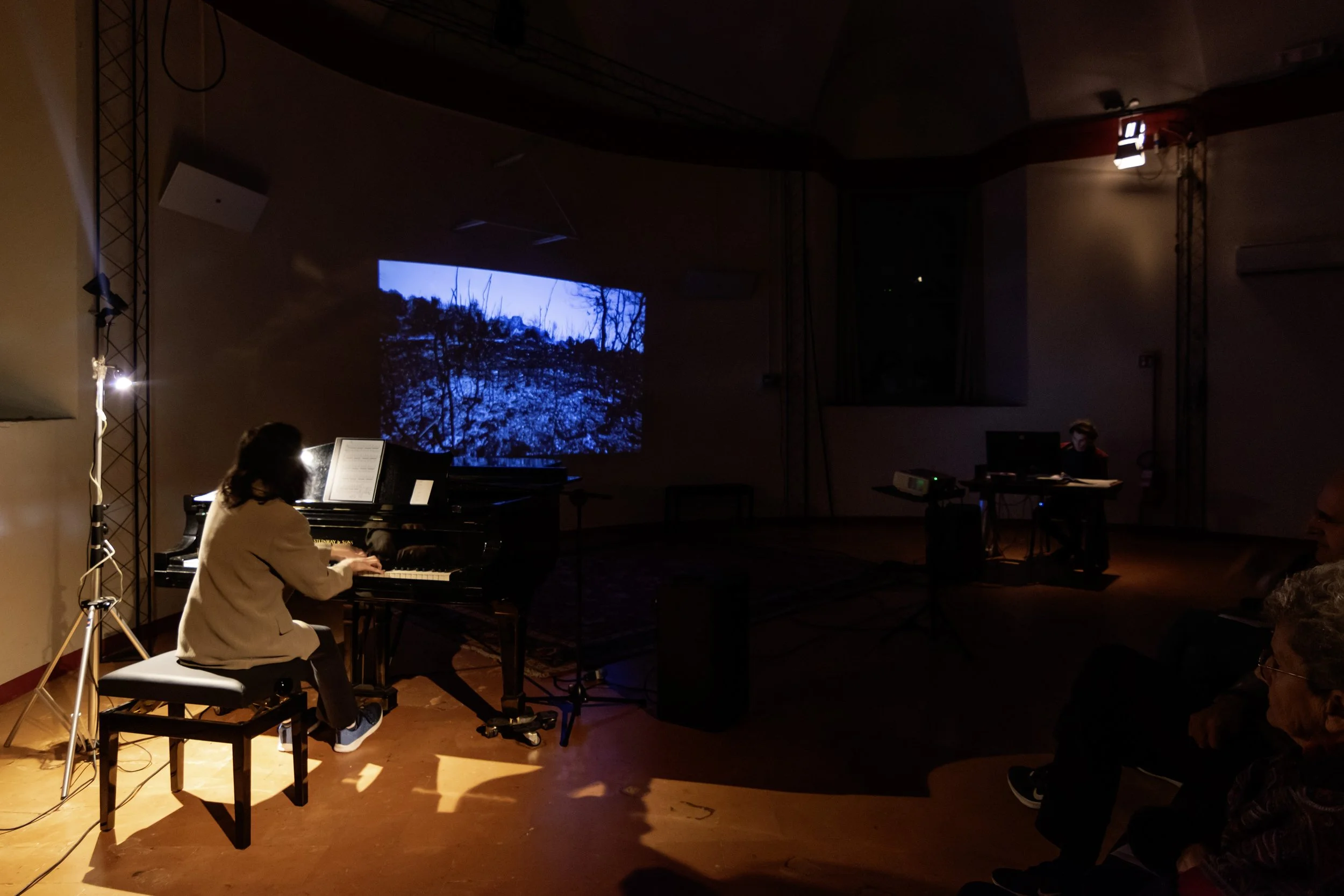
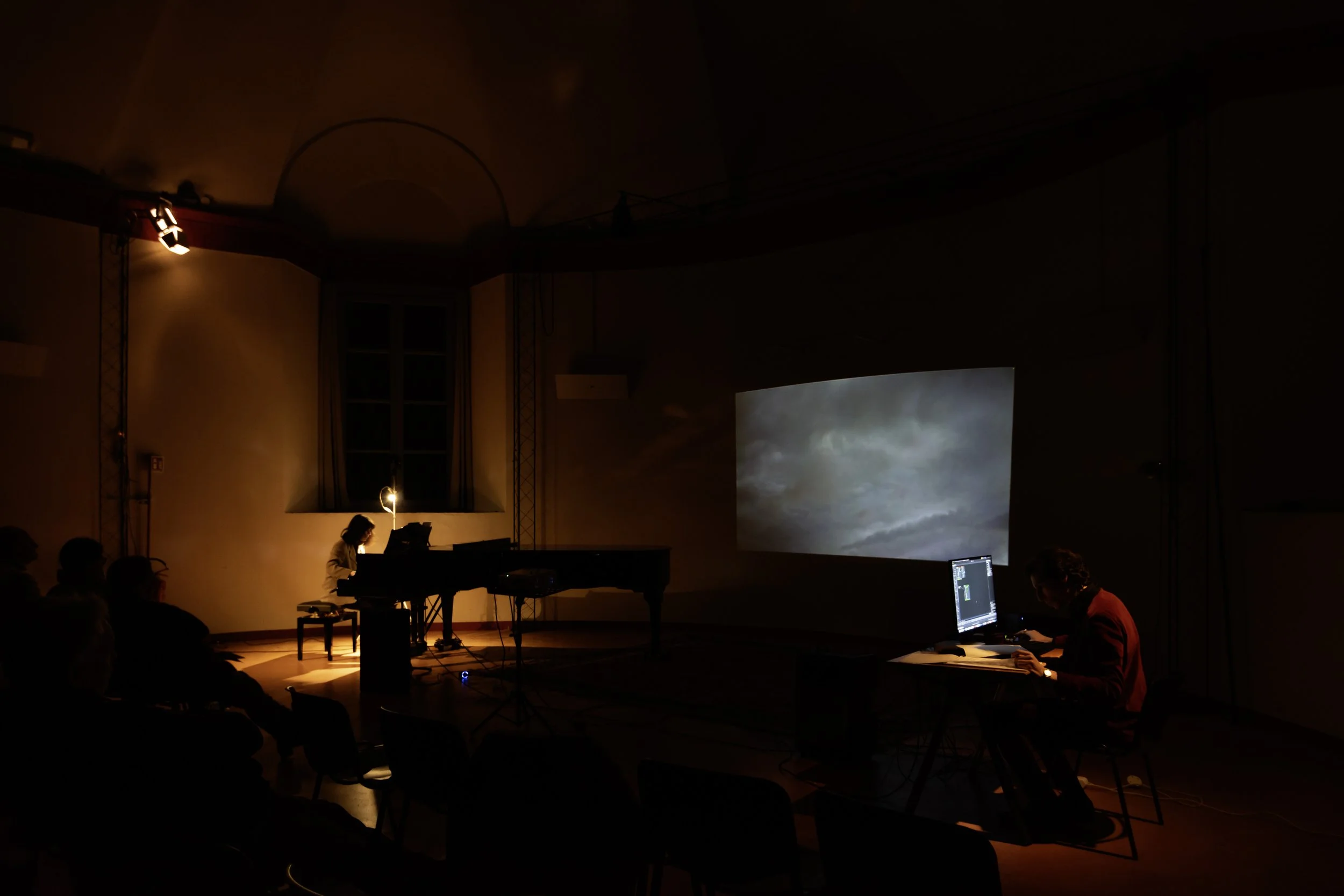
The final output consists of a 45-minute performance for piano, fixed electronics, and video, followed by a presentation of a series of paintings created during the process. The audience first experiences the performance in the main gallery space, where the piano and viewers are arranged together. The video is projected on a wall, while the paintings are displayed along the side. After the performance, the audience is invited to engage with the paintings, extending the experience into a visual dimension.
The use of video in relation to classical and contemporary music has become a widespread practice. During live musical performances, visual content is often presented through projections on screens, building facades using 3D mapping programs, or even via virtual reality systems. This practice has been present for many years across various musical genres. Visual interfaces enhance audience comprehension and reduce the distance between performers and the audience[4]. The result is an interactive and innovative path that allows the audience to listen to and perceive classical and contemporary music in a multidisciplinary and engaging way.
Paintings and sculptures by Amalia Castoldi.
Reworking of the pieces by Castoldi/Rota. (Audio: Rota, Video: Castoldi/Rota).
[1] Amalia Castoldi, “Resonant Paintings: Relazione sulle possibilità di raffigurazione pittorica di un brano musicale,” Bachelor’s thesis, Civica Scuola di Musica Claudio Abbado, Department of Classical Music – Piano, Milan, 2023.
[2] Charles Blanc-Gatti (1890–1966) was a Swiss painter and musician associated with synesthetic art. His work explores the relationship between sound and color, translating musical structures into abstract visual compositions, often described as “visual music.”
[3] Luigi Veronesi (1908–1998) was an Italian painter, photographer, and filmmaker associated with abstract art and early audiovisual experimentation. His work investigates the relationship between visual form and musical structure, often through geometric abstraction and systematic approaches to visualizing sound.
[4] N. N. Correia, D. Castro, and A. Tanaka, “The role of live visuals in audience understanding of electronic music performances,” in Proc. ACM Int. Conf. Interactive Surfaces and Spaces (ISS), London, UK, 2017.
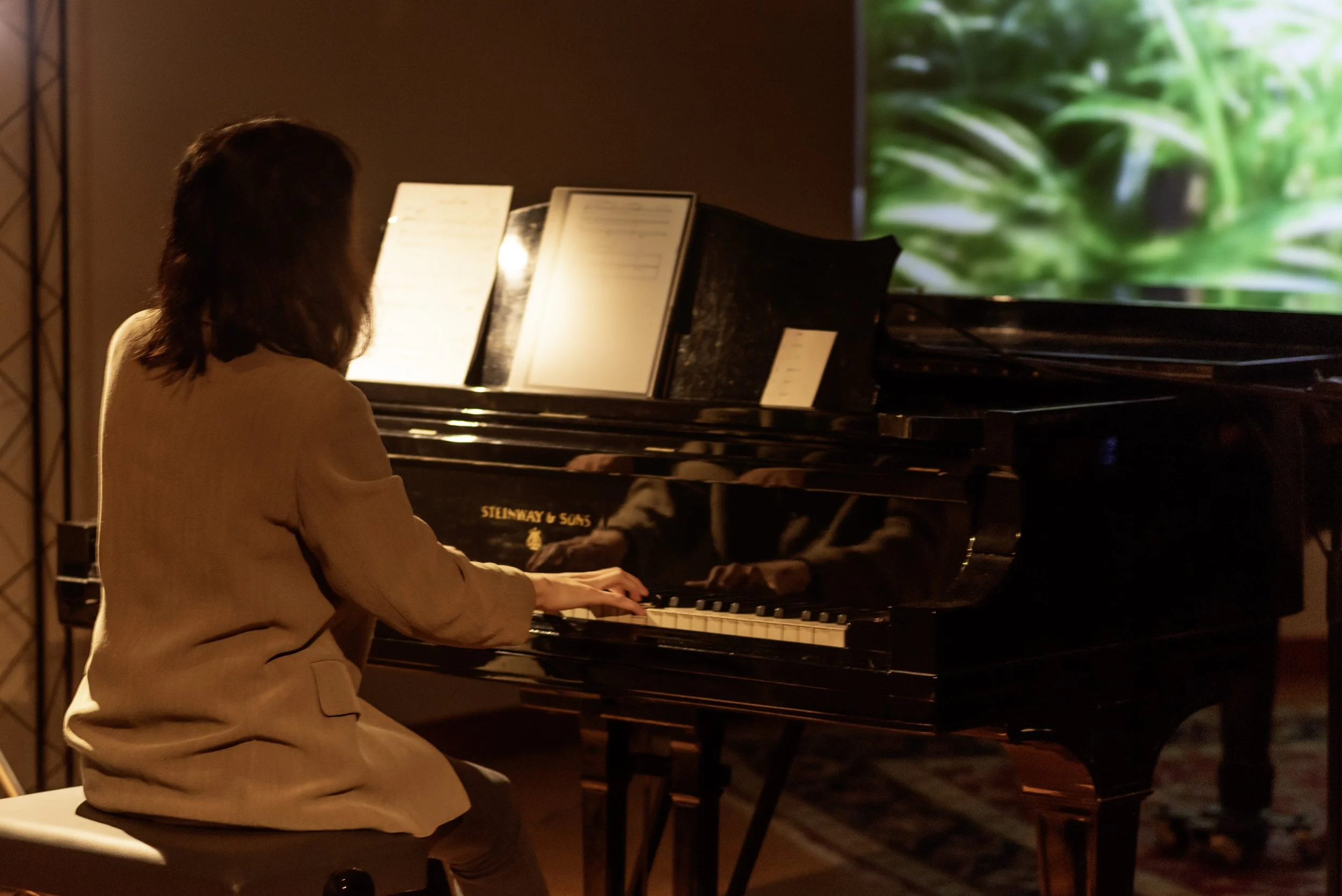
Amalia Castoldi – Piano
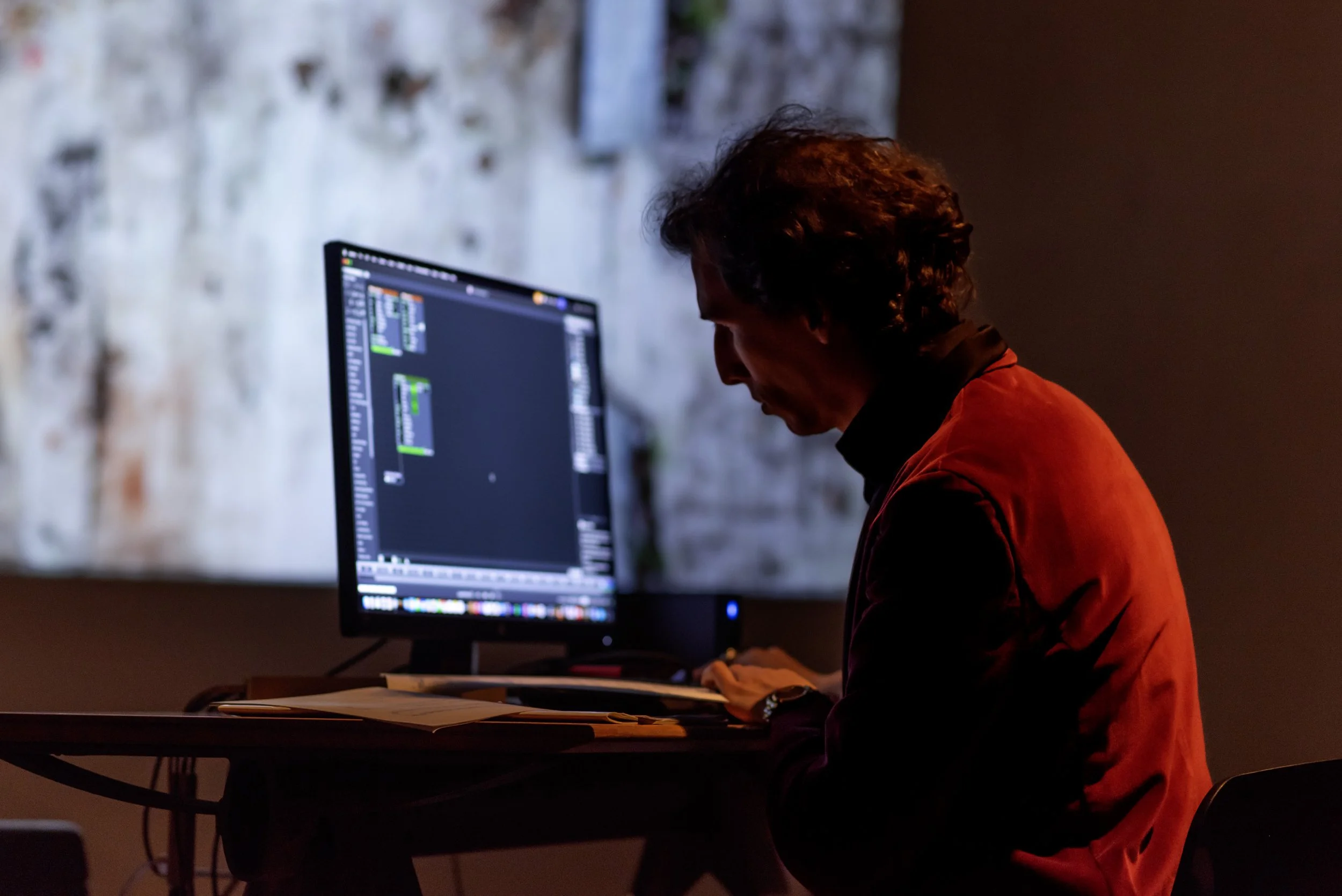
Francesco Rota – Live electronics
Paintings and sculptures by Amalia Castoldi.
Reworking of the musical pieces by Castoldi / Rota (audio: Rota; video: Castoldi / Rota).
Duration: 45 minutes performance + 10 minutes viewing = total 55–60 minutes
Previous representation:
28 Novembre 2025 – San’Andrea theatre, Bergamo (Italia). Entropia 2025, Lester Foundation.
Op. 8 n. 28
2024-2025. Video, 2-channel tape, music for piano, oil on canvas, cotton threads, nails. 100 x 80 cm.
La Cathedrale Engloutie
Claude Debussy (1862 – 1918), Preludio X Book I – Reworked by Castoldi/Rota
Op. 6 n. 8
2021-2025. Video, 2-channel tape, music for piano, oil on canvas. 100 x 100 cm.
4’ 33” (1952)
John Cage (1912 – 1992) – Reworked by Castoldi/Rota
Op. 8 n. 31
2025. Video, 2-channel tape, music for piano, oil on canvas. 50 x 40 cm.
Darknesse visible (1997)
Thomas Adès (b. 1971) – Reworked by Castoldi/Rota
Program:
Op. 8 n. 32
2025. Video, 2-channel tape, music for piano, oil on canvas. 60 x 50 cm.
Unus Mundus (2017)
Ingrid Stölzel (b. 1971) – Reworked by Castoldi/Rota
Op. 8 n. 33
2025. Video, 2-channel tape, music for piano, oil on canvas. 60 x 80 cm.
Montagne Déchireé – ce qu'a vu le Monsieur Croche (2006)
Manfred Trojahn (b. 1949), Douze Preludes No. 2 – Reworked by Castoldi/Rota
Below are video excerpts from the performance.
Due to the presence of projected videos in addition to the piano performance, the music was recorded separately in another location and then edited onto the video, so that the work could be presented clearly.
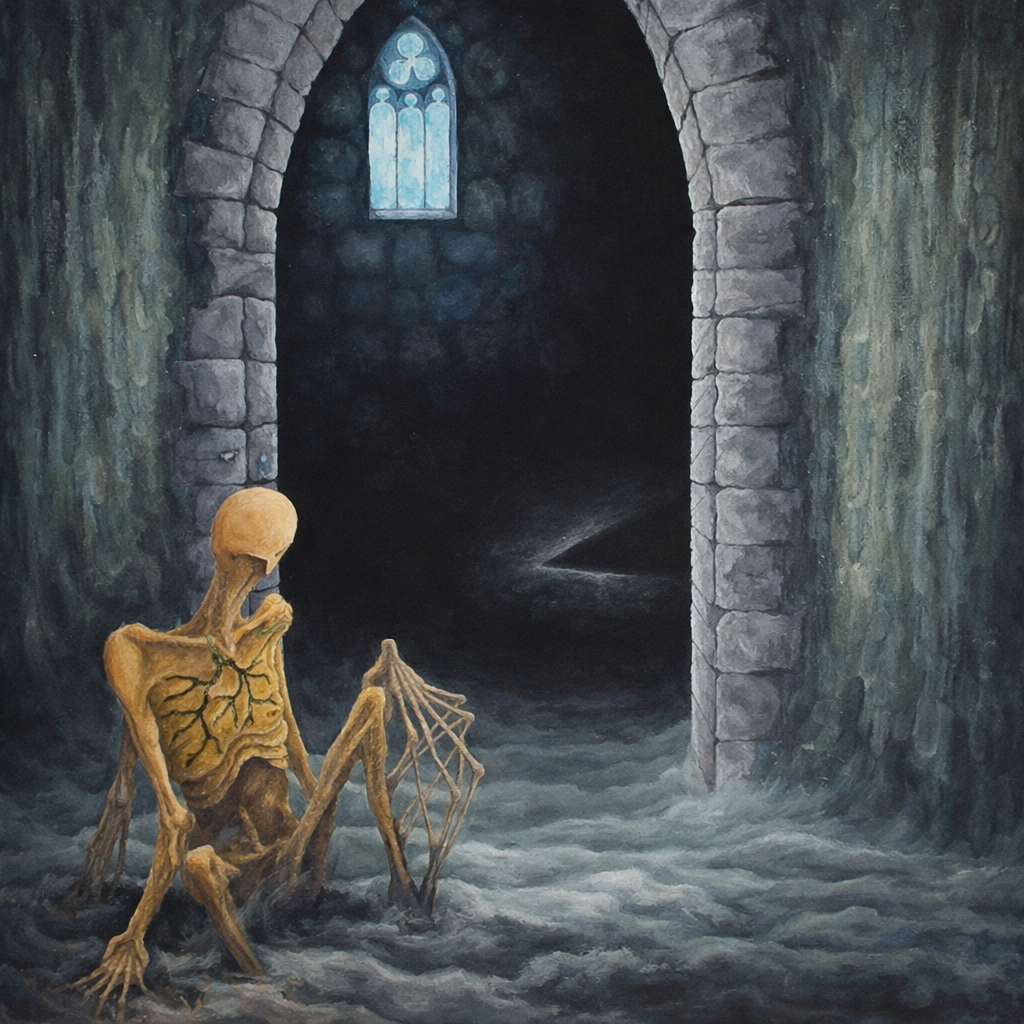
Op. 8 No. 31
2025. Video, 2-channel tape, music for piano, oil on canvas 60 x 50 cm.
Darknesse visible (1997)
Thomas Adès (b. 1971) – Reworked by Amalia Castoldi/ Francesco Rota
Darkness Visible is based on a contemporary piano piece by Thomas Adès, itself a re-composition of music by John Dowland. Dowland’s original work contains a deeply dark, almost horror-inflected poetic imagery, which remains largely concealed in the musical surface due to the performance practices of its time. Adès’ reworking introduces a subtle tremor that gradually stretches the musical tension, keeping it constantly on the verge of emergence. The intermedial reworking by the artist and Francesco Rota does not alter this structure but offers a perceptual key to it: through video, form and sound, the work explores the act of glimpsing one’s own inner sensations within darkness, as they intermittently take shape and are revealed by an unstable, discontinuous light, comparable to that of a candle
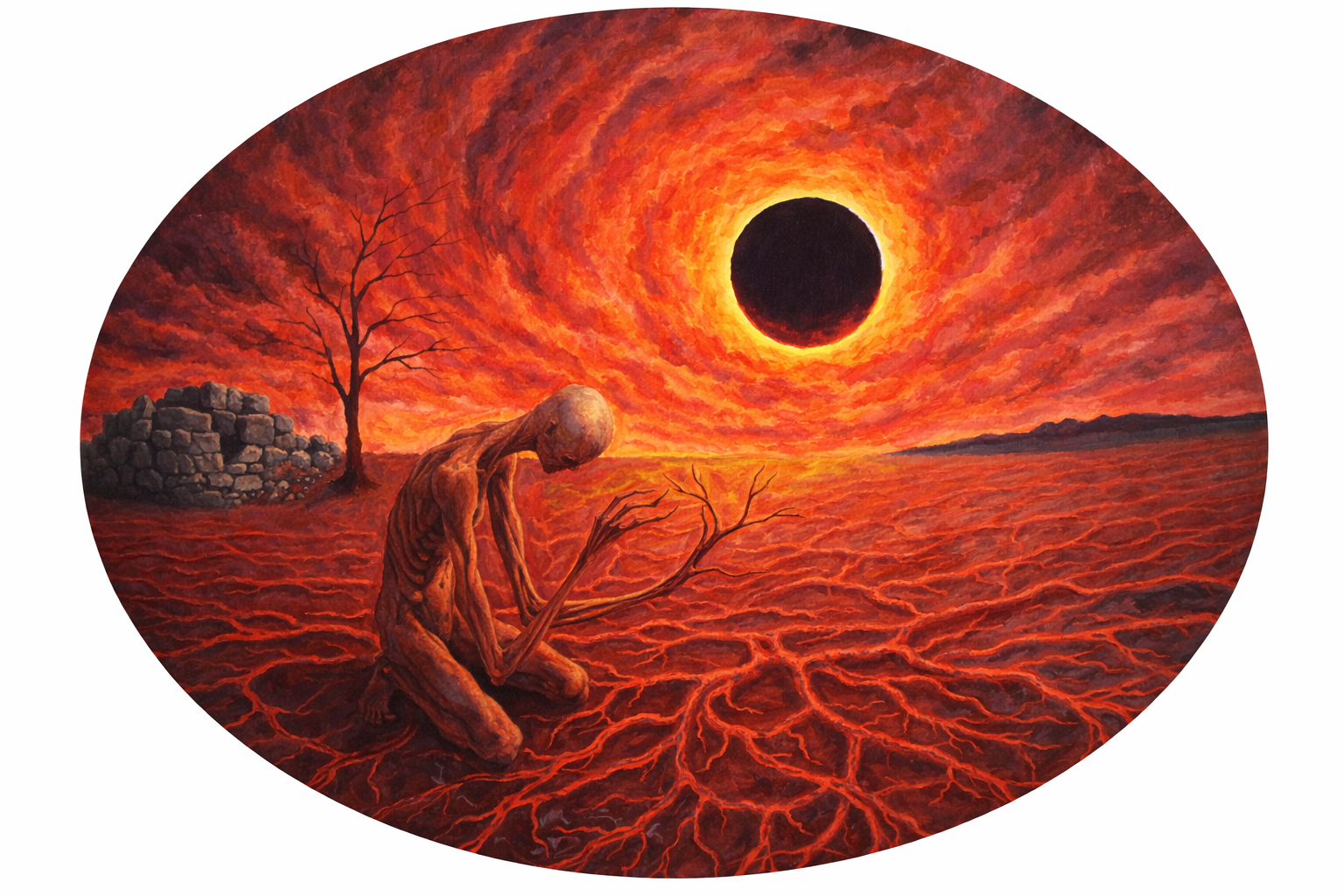
Op. 8 No. 31
2025. Video, 2-channel tape, music for piano, oil on canvas 60 x 50 cm.
Unus Mundus (2017)
Ingrid Stölzel (b. 1971) – Reworked by Castoldi/Rota
The musical source of Unus Mundus is a contemporary piano work by Ingrid Stölzel, described by the composer as an emotional landscape and structurally conceived as a circular form, in which the ending returns to the beginning. In her notes, Stölzel refers to the concept of yin and yang as a generative principle. The reworking by the artist and composer Francesco Rota expands this idea into an intermedial investigation: yin and yang are treated as two complementary modes of being rather than as specific emotions. In the video, they appear as alternating phases of the same place— thinking of Silent Hill—while in the painted image they coexist simultaneously, forming a unified space (unus) where opposites are held together rather than resolved
Op. 8 No. 33
2025. Video, 2-channel tape, music for piano, video art.
Montagne Déchireé – ce qu'a vu le Monsieur Croche (2006)
Manfred Trojahn (b. 1949), Douze Preludes No. 2 – Reworked by Amalia Castoldi/Francesco Rota
Montagne Déchirée originates from a piano work by Manfred Trojahn, subtitled “What Mr. Crooked Saw.” The piece alternates a strongly agitated and dramatic character with a third theme marked by the composer as “dreaming,” softer and more suspended. The title recalls a figure used in a horror film as the name of a possessed toy. In the reworking by the artist and Francesco Rota, the musical form is reinterpreted as a radical dilation of a single instant: from the opening to the final arpeggio preceding the last six measures—where a varied reprise of the third theme appears in a slow tempo—the entire work unfolds within the moment immediately before an act of self-harm. Within this compressed temporal space, two primary emotional forces are condensed and collide. “Mr. Crooked” becomes an ambiguous humanoid figure, simultaneously a personification of inner agitation and a manifestation of the insistent, destructive impulse—the proverbial “devil on the shoulder”—that pushes toward harmful action